Quick answer
Genuine python leather has an uneven scale pattern, scales that lift slightly under your thumb, and a natural leather smell. The underside is often soft leather or suede, not fabric or plastic.
Printed and embossed fakes tend to repeat their pattern and feel flat. No single check is proof, so use several.
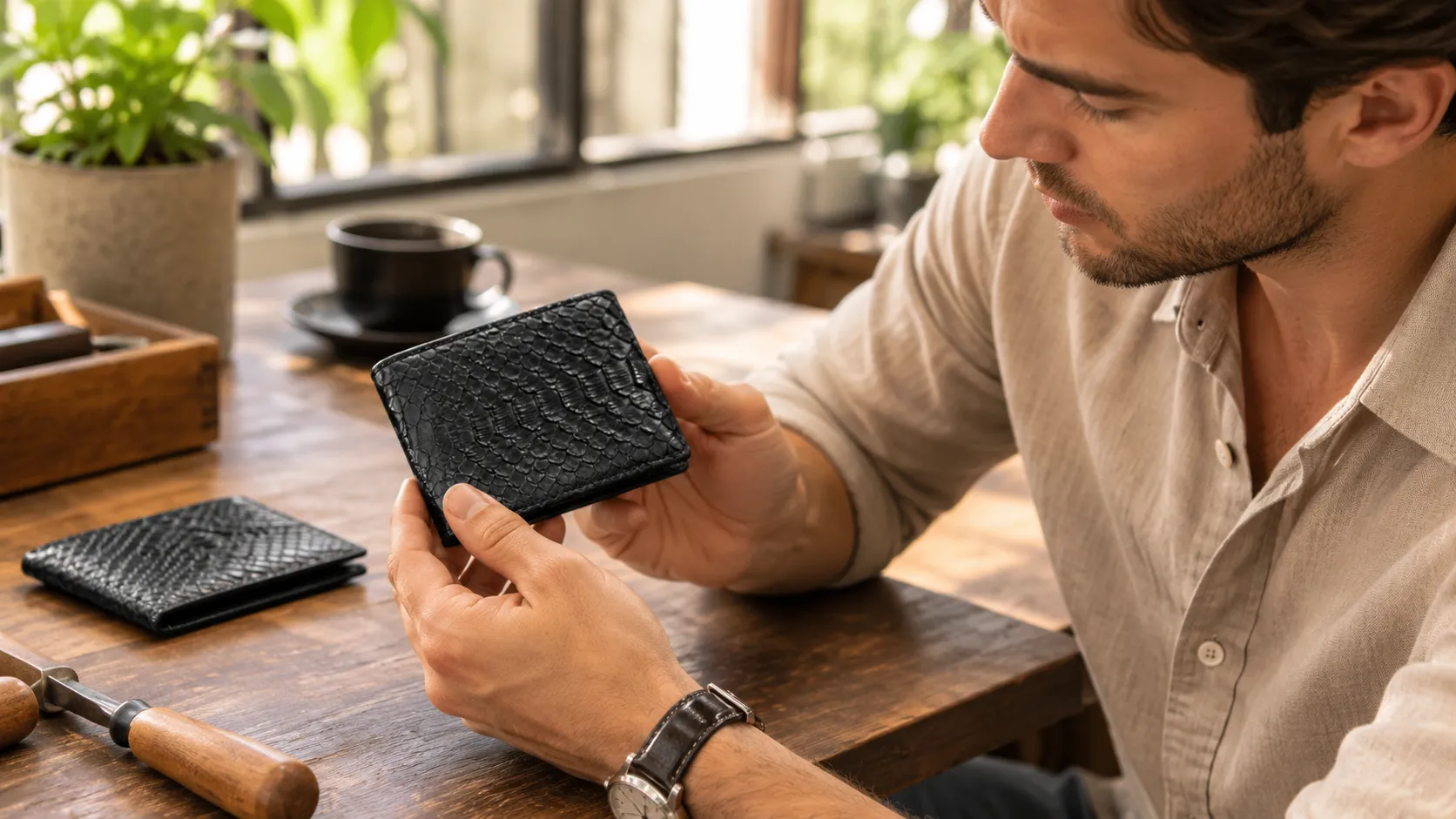
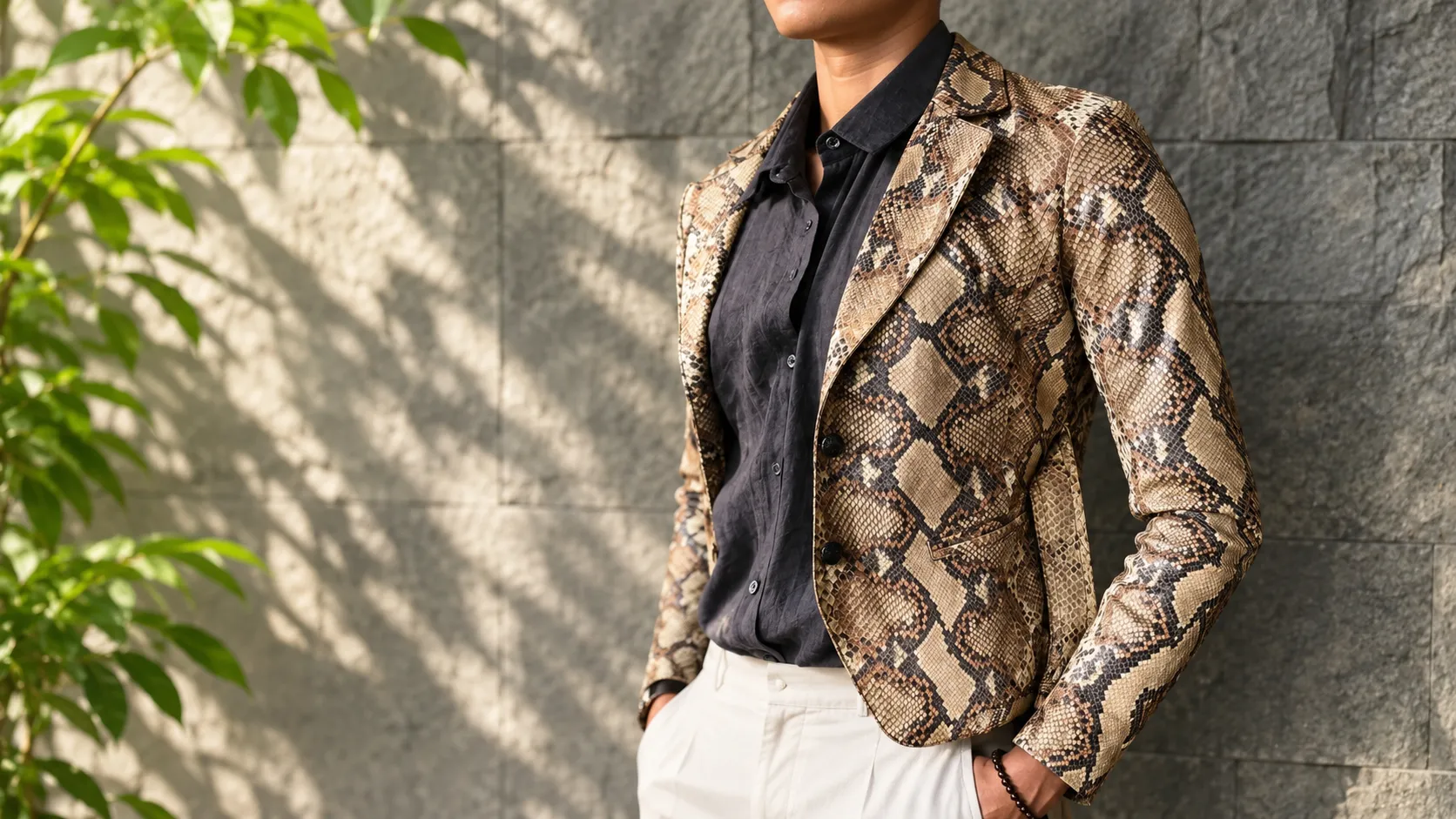
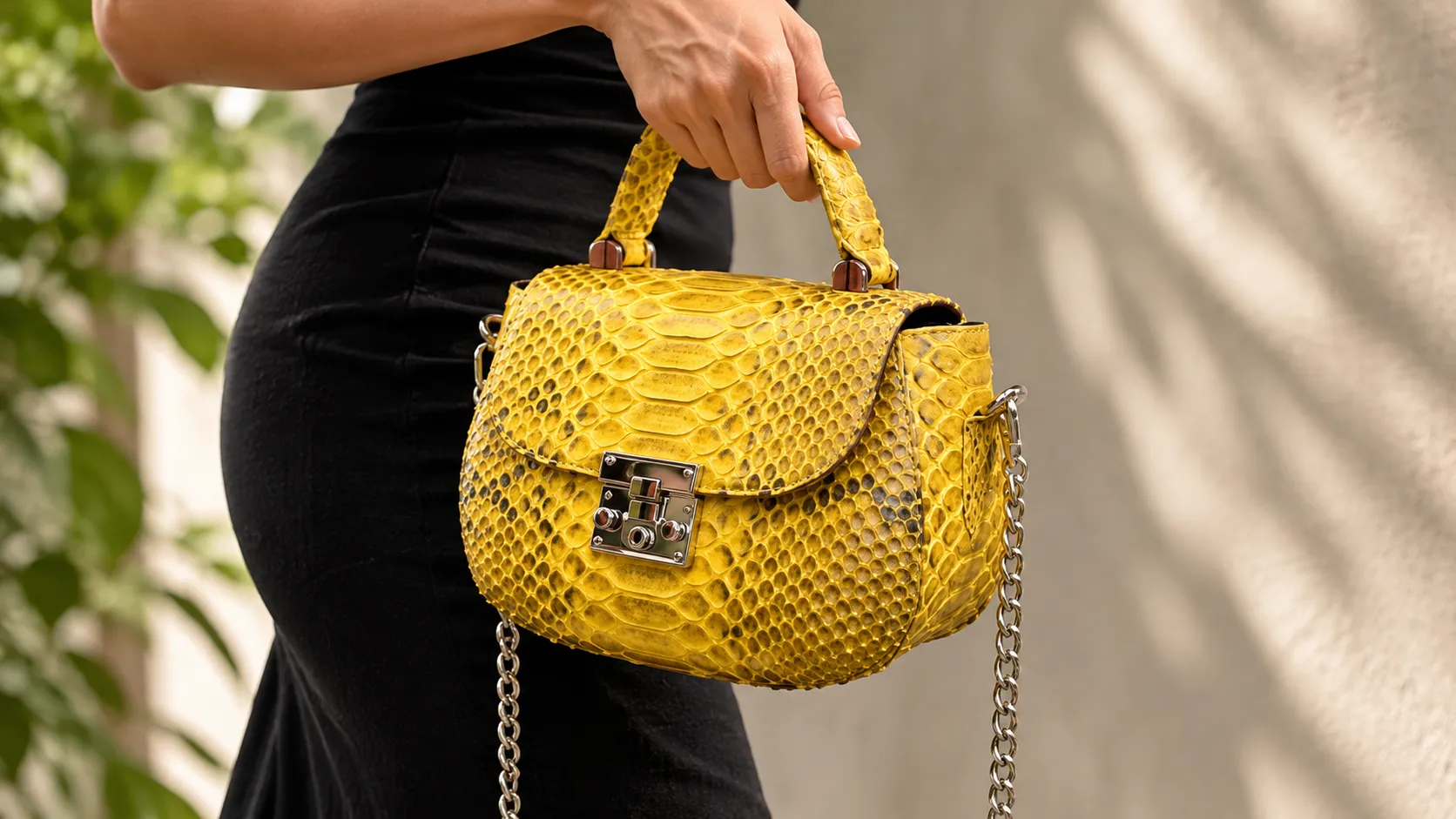
Python leather is used for bags, wallets, boots and belts. Its natural pattern and texture make it stand out from ordinary leather.
Each python skin is different. No two hides are the same.
That makes the material a target for imitation. Fake python leather may look convincing at first.
Some use printed patterns or embossed textures to mimic the real thing. But these copies do not match the feel or scent of genuine python leather.
This often leads to disappointment, especially for online buyers who can’t examine the product in person. This guide explains how to tell the difference in clear terms.
If you are comparing real and fake python leather, these checks help you decide before you buy, online or in-store. Use several checks together.
New to the material? Read what python leather is, then come back to the checks.
How to Tell if Python Leather Is Real: 5 Signs
Genuine python leather has signs you can see and feel. These traits help you tell it apart from fakes.
- Irregular Scale Pattern. Each python skin is different.
The scales are not perfectly shaped or evenly spaced, so the same pattern should not be repeated across the leather. - Raised Texture. Some scales lift slightly, especially near the edges.
This is normal. Run your thumb across the scales against the grain.
Real python leather lifts and catches. Embossed cowhide tends to stay flat.
A glossy coating can hide this, so use it with the other checks. - Natural Leather Scent. Real python leather smells like leather; it does not have a plastic or chemical smell.
If it smells fake, it probably is. - Soft, Suede-Like Backing. The underside of genuine python leather is often lined with smooth leather or suede.
It does not feel like fabric or plastic. Some skins may be backed with thin lining for structure, but it still feels like real hide. - Higher price. Genuine python leather usually costs more than similar items made from regular leather or synthetic material. Price alone is not proof.
Faux or Fake Python Leather: 6 Signs to Watch For
Fake python leather may look convincing at first. But there are clear signs that it’s not real.
- Repeating or Mirrored Pattern
- Fake leather often uses printed or stamped designs. These patterns repeat and may look too perfect.
- Real python skin does not repeat the same block of pattern.
- Flat or Shiny Surface
- Fakes are usually smooth or glossy. The texture may feel too soft, too stiff, or too plastic.
- Real python leather has slight bumps and variations you can feel.
- Strong Chemical or Plastic Smell
- Synthetic materials often smell like glue or plastic. Real leather has a natural, earthy scent.
- A strong odour is a warning sign.
- Fabric or Plastic Backing
- Check the back of the leather. Fake products may use fabric or plastic as support.
- It won’t feel like suede or soft leather.
- Low Price
- If the price seems too low for exotic leather, it may not be real. Fakes cost less to make and are often sold in bulk. A low price is a warning sign. A high price is not proof either.
- Vague Product Details
- Fakes are often listed without the skin type, the part of the skin or the lining. Ask which part of the skin is used and what the lining is.
Real vs Fake Python Leather: Quick Comparison
| Feature | Real Python Leather | Fake Python Leather |
|---|---|---|
| Scale Pattern | Irregular and natural; no two are the same | Repeating or mirrored pattern |
| Texture | Slightly raised scales, textured feel | Flat, smooth, or overly glossy |
| Smell | Natural leather scent | Synthetic or chemical smell |
| Underside | Suede-like or lined with soft leather | Fabric, plastic, or stiff synthetic backing |
| Price Range | High; reflects value and rarity | Low; often priced for mass sales |
| Product details | Names the skin, the part of the skin and the lining | Vague or missing details |
| Flex | Strong and flexible | May feel stiff or plastic |
How to Tell Real Snakeskin from Fake: Online and In-Store
Buying Online
1. Ask for Close-Up Photos
Request detailed images that show the scale texture, edges, and backing. Zoom in to check for irregular patterns and slight scale lift.
2. Ask About the Material
Ask which part of the skin is used and what the lining is.
3. Review the Store’s Return Policy
Only buy from stores that offer clear return options. If the product turns out to be fake, you’ll need a way to get a refund.
4. Research the Seller
Check reviews, location, and how long they’ve been in business. Be cautious if the product is priced too low or lacks full product descriptions.
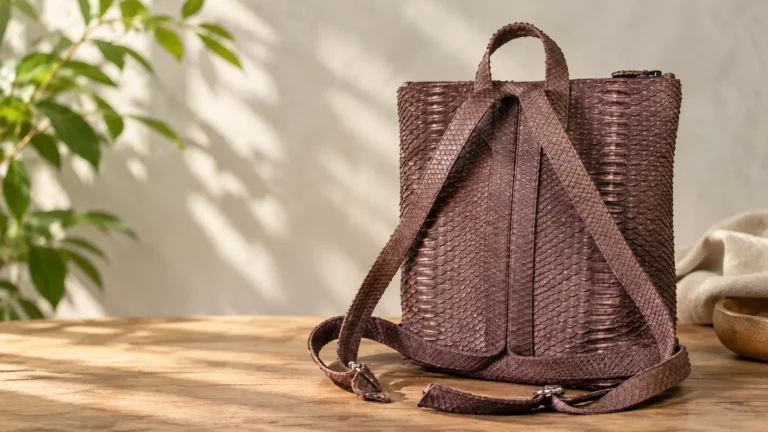
Buying a bag? Check the lining and the underside too. See our snakeskin bags, or read python skin bags compared with cowhide.
Buying In-Store
1. Touch the Surface
Feel for raised or uneven textures. The scales on real python leather are not smooth or flat.
2. Check the Underside
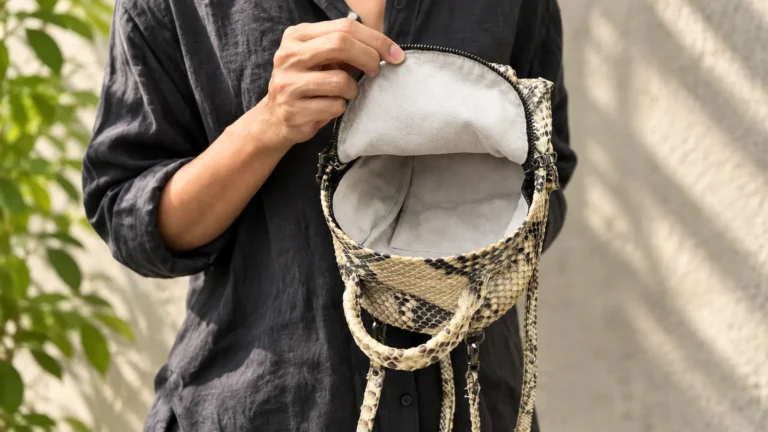
Turn the product over or look inside. Real python leather is often backed with soft leather or suede, not plastic or fabric.
3. Smell the Material
Gently sniff the item. Real leather has a distinct natural scent. Fakes often smell like chemicals or plastic.
4. Look for Natural Pattern Variation
Move the item under light. Real scales reflect light unevenly and have small flaws. Fakes tend to look uniform and symmetrical.
5. Ask Questions
Ask staff which part of the skin is used and what the lining is. Honest sellers will give clear answers.
Why Authentic Python Leather Is Worth It
Check the scale pattern, the texture and the underside, as for any python leather. Then use the five checks below, which suit boots and python leather shoes.
1. Bend the boot where your foot flexes. Look at the scales along the crease.
On real python leather they tend to shift a little at the edges. A printed or embossed surface tends to crease as one sheet.
2. Compare the panels. Look at scale size and spacing from one panel to the next.
A pattern that repeats the same block is a warning sign.
3. Look inside. Real python leather is often backed with soft leather or suede, not fabric or plastic.
Ask what the lining is.
4. Ask for close-up photos of the shaft, the toe and the inside. Zoom in on the scale edges.
5. Compare the price with the material. A very low price for exotic leather is a warning sign, not proof.
A glossy coating can hide scale movement, and photos can mislead. No single check proves a pair of boots is real, so use all five.
See our snakeskin boots. If your boots get wet, read what happens if python skin boots get wet.
What You Get With Real Python Leather
Real python leather costs more. Here is what is different about it.
- Unique Appearance. No two python skins are the same. z
- The scale pattern is natural, not printed. Colour and pattern on an item can differ from the photos.
- Strong and Flexible. Python leather is strong yet flexible.
How to Check IndoPython Goods
Use the same checks on our goods. Before you order, you can ask us for close-up photos of the scales, the underside and the lining.
Every skin is different. Colour and pattern will differ from the photos. That is normal for real skin.
Conclusion
Python leather is a rare material. But many fake products are made to trick buyers.
Knowing what to look for, like scale texture, scent and backing, can help you avoid poor-quality copies.
If you are shopping online, ask for clear close-up photos. If you’re buying in-store, trust your senses.
Touch the surface, check the backing, and look for natural flaws.
Real python leather has a natural, uneven scale pattern that copies rarely match.
No single check proves a piece is real. Photos can mislead, and a glossy coating can change how real skin feels.
If you are unsure, ask the seller for more photos before you pay.
Frequently Asked Questions
How can you tell if python leather is real?
Real python leather has an irregular scale pattern, a slightly raised texture, and a natural leather scent. Check the underside too.
It is often soft leather or suede, not fabric or plastic.
How can I tell if python boots are real?
Check the scale pattern, the feel and the underside, as for any python leather item. Then bend the boot where your foot flexes and look at the scales along the crease.
Ask the seller for close-up photos of the shaft, the toe and the inside.
Is real python leather expensive?
Yes. Real python leather costs more than standard cowhide or synthetic leather because the material is rare and regulated.
Low pricing is often a sign that the product is fake.
Can fake python leather look real in photos?
Yes. Many fakes are designed to look real in online images.
That’s why it’s important to ask for close-up shots and texture details when buying online.
Does IndoPython provide CITES documentation?
We provide CITES export documentation for skins traded in wholesale quantity. We do not currently provide individual CITES paperwork with retail orders.
Check your own country’s import rules before ordering.
Can I trust python leather sold on marketplaces like eBay or Etsy?
Many python leather listings on online marketplaces may look real, but not all sellers offer genuine material. To avoid fakes, ask for close-up photos.
Ask which part of the skin is used and what the lining is. Compare the price with the material.
IndoPython sells goods made from Indonesian exotic leather, mainly python skin, on our official website and Etsy. Every skin is different, so colour and pattern vary from the photos.
Browse our snakeskin leather, snakeskin wallets and snakeskin belts.